The four chambers
Right atrium, right ventricle, left atrium, left ventricle — visited in the order blood actually travels, with the valves as doors you go through.
Micro Missions™ Series
One organ, one adventure at a time. Book 1 is finished; Book 2 is in development.
Book 1 · Cardiovascular
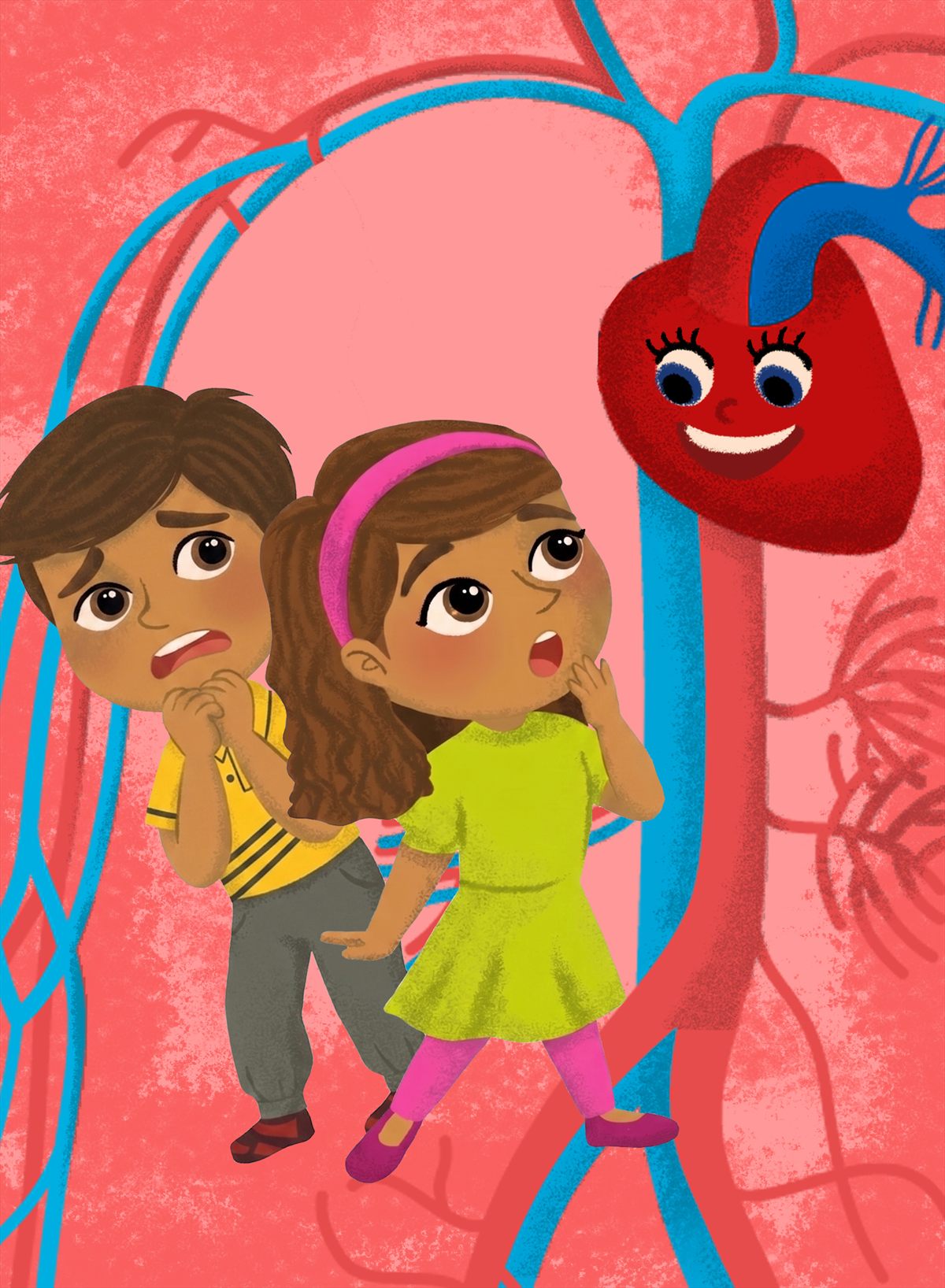
Tyler and Tia are flat on the living room floor when it starts pulling them in, and everything goes dark. They wake in Heartland, where the color red has gone missing because Haley the Heart lost her blanky, Hearty. Finding it means boarding a red blood cell and searching all four rooms of a working heart.
Not on sale yet. Launch-list members hear first — on the day, by email.

The story
Tyler and Tia were flat on the living room floor, looking up at the ceiling fan, when their legs stopped working and the floor began taking them in. The lub-dub got louder, then faster. Then silence, and everything went dark.
They wake in a place called Heartland, where a hovering, muscular heart with a red tube and a blue tube sprouting from the top like wiggly ponytails introduces herself as Haley — and then breaks down crying. The color red left Heartland the day she lost Hearty, her blanky. “Can you imagine a heart without love?”
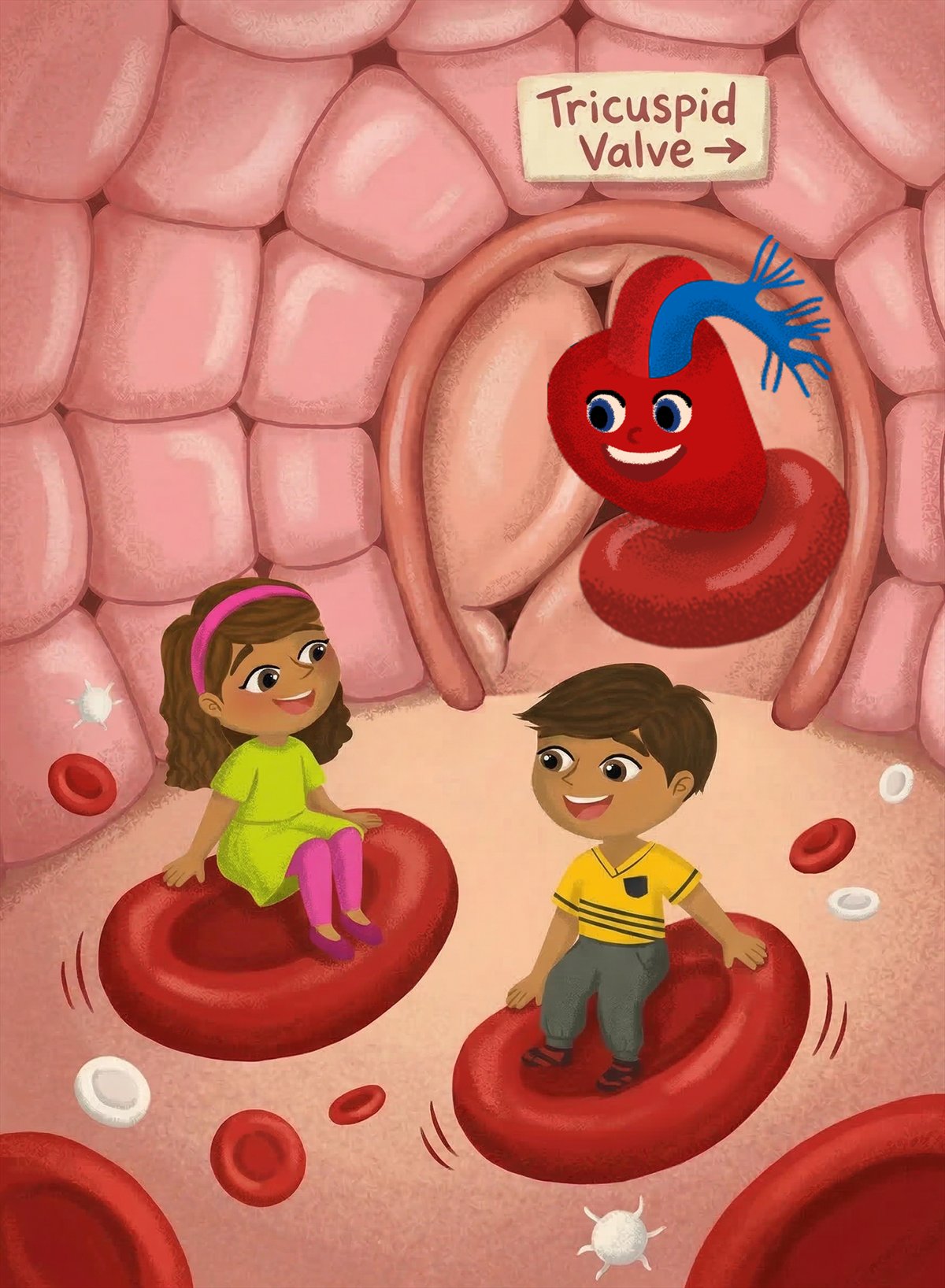
Her plan has four stops, beginning in the right atrium, and the boats are red blood cells: donuts without the hole. Somewhere along the way, wedged between two of them, is something small and soft — and the current doesn’t slow down for anyone.
What’s actually in here
By the last page a reader has been through every chamber of the heart in the correct order — and could probably draw it.
Right atrium, right ventricle, left atrium, left ventricle — visited in the order blood actually travels, with the valves as doors you go through.
Tricuspid, pulmonary, mitral, aortic. Three doors, then two. What lub-dub is, and which valve makes which half of the sound.
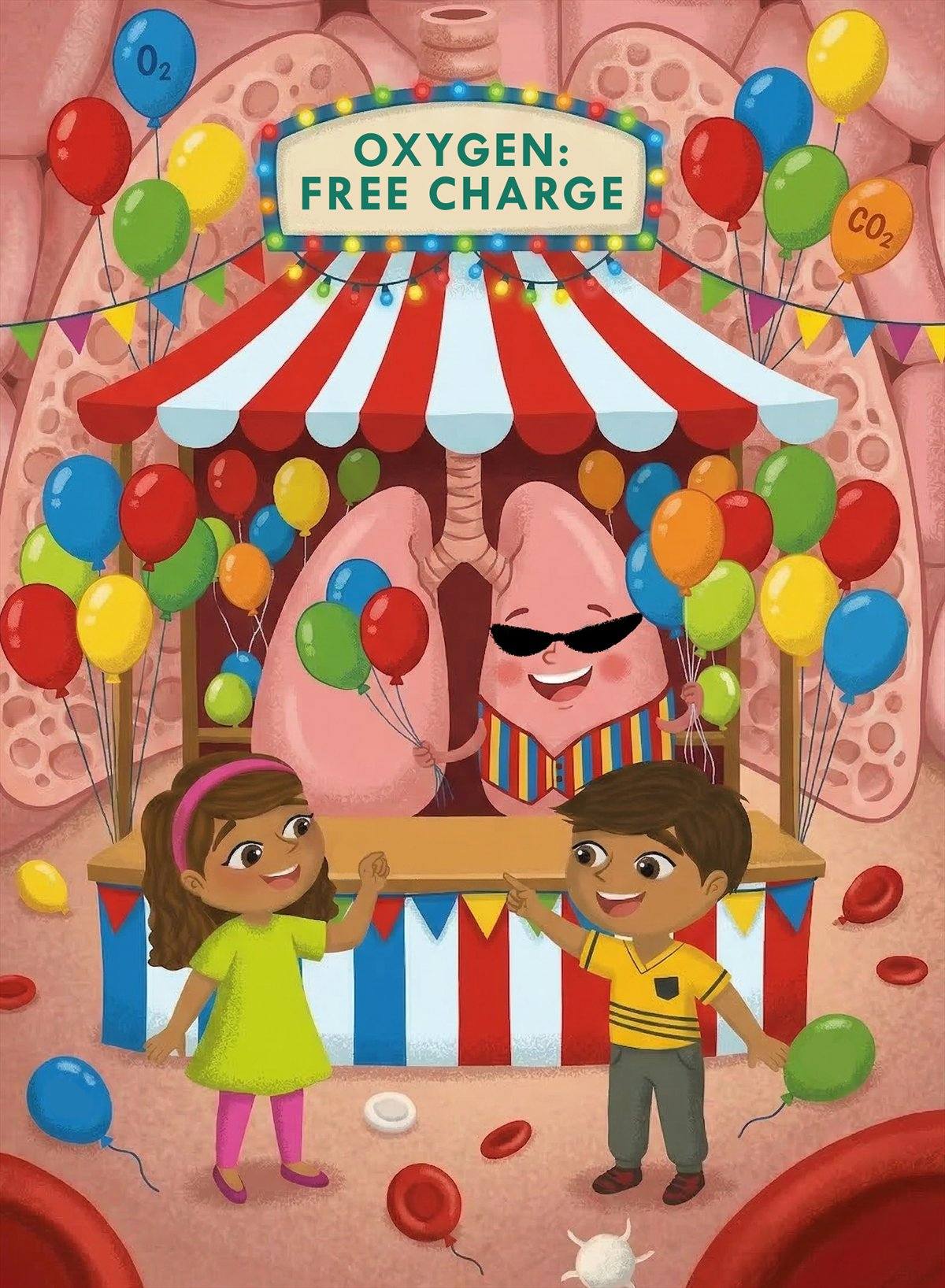
Oxygen in, carbon dioxide out, at Lung Bro’s stand in the alveoli. Why veins look blue through your skin but blood never actually is.
Red blood cells as boats. Hemoglobin as cargo. White blood cells as the spiky ones on patrol. Twenty-five trillion of them, all working right now.
Why the left ventricle’s walls are three times thicker than anything else in the heart, and what a blood pressure number is really measuring.
Why your heart races when you’re scared, why a hug helps, and why it’s always okay to ask a grown-up about your own chest.
Medically accurate, cheerfully signposted
There is a real temptation, writing science for six-year-olds, to swap the true thing for an easier thing. This book doesn’t. The valve is called the tricuspid valve. It has three cusps. Tri- means three. It is drawn where it actually is, and the kids go through it in the direction blood actually goes.
What gets simplified is the sentence, never the fact. That distinction is the whole brand.
The details
Everything a bookseller, librarian or careful gift-buyer usually asks for.
| Title | The Heartbeat Mystery |
|---|---|
| Series | Micro Missions™ Series, Book 1 |
| Author | Dr. Anand Gopalsami |
| Body system | Cardiovascular |
| Reading age | 6–10, grades 1–4 (early reader / early chapter book) |
| Trim size | 5.5 × 7.5 in |
| Extent | 98 pages, full color throughout |
| Formats & price | $14.99 paperback · $4.99 ebook |
| Publisher | MindStir Media |
| LCCN | 2026912047 |
| Availability | Launching soon — retail links will appear here on launch day |
Big words from Heartland
Book 1 ends with a pronunciation glossary, because “tricuspid” is a wonderful word and kids deserve to be able to say it out loud.
Capillary (KAP-ih-lair-ee): The tiniest blood vessels in your body — so small that red blood cells line up single-file to squeeze through.
Coming next
He turns up in Book 1 running an oxygen stand in the alveoli. Sunglasses. Big smile. “Duuude.”
In Book 2 he leaves the chest for the first time. Lung Bro has never been to school. Never run a mile. Never tasted a peanut butter cookie. Tyler and Tia thought it was going to be a normal day.
The respiratory system, from the inside out — currently in development.